Janjeva


Overview
“This coin is showcased in the exhibition at the “National Museum of Kosovo”, respectively in the Numismatic Collection. – “National Museum of Kosovo”
Theodosius I. also known as Theodosius the Great was Roman emperor from the year 379 to 395. His reign accelerated the Christianization of the Roman Empire, achieved military successes when the empire’s borders were threatened by the wars of the Migration Period, and defeated two rival emperors in successive civil wars. He was the first emperor of the Theodosian Dynasty. His decrees made Nicene Christianity the state church of the Roman Empire and condemned Roman paganism, Hellenistic religion and Arianism. After a military career and a governorship under his father Theodos the Elder, he became magister equitum and was then raised to the imperial rank of augustus by the emperor Gratian. He replaced his uncle and the elder Augustus, who had been killed at the Battle of Adrianople. Theodosius married Gratian’s half-sister Galla, daughter of Valentinian the Great, and defeated the rebellion of Magnus Maximus on behalf of his new brother-in-law, Valentinian II. When Valentinian II died, Theodosius became the senior emperor, having already made his eldest son Arcadius his co-Augustus. Theodosius then defeated the usurper Eugenius. Theodosius was suffering from an illness that included severe edema in Milan. According to the Consularia Constantinopolitana, Theodosius died in Mediolanum on January 17, 395. (Lippold, A. (2023). Theodosius I. Encyclopedia Britannica, 1. Retrieved from https://www.britannica.com/biography/Theodosius-I)
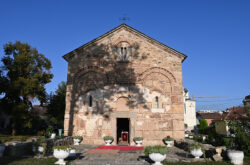
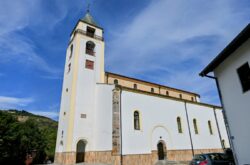
And two of his coins, which were the official currency in his empire, were found precisely in the village of Janjevë/Janjevo, a fact that speaks of the antiquity of the locality of Janjevë/Janjevo.
Georeference: /
Plus Code – Google Maps: M588+7F Pristina
Category: Culture
Subcategory: Coin of the Numismatic Period (Museum Movable Object)
Legal protection status: Yes
Is it used for tourism? Yes
Is there potential for tourism in the future? /
Road infrastructure to the location: /
Signs and orientation to the location: /
Boards on site: /

Get Directions
Visited 420 times, 1 Visit today